Human Skull
Human Skull
The skull is the bone structure of the head that protects the brain and forms the face.
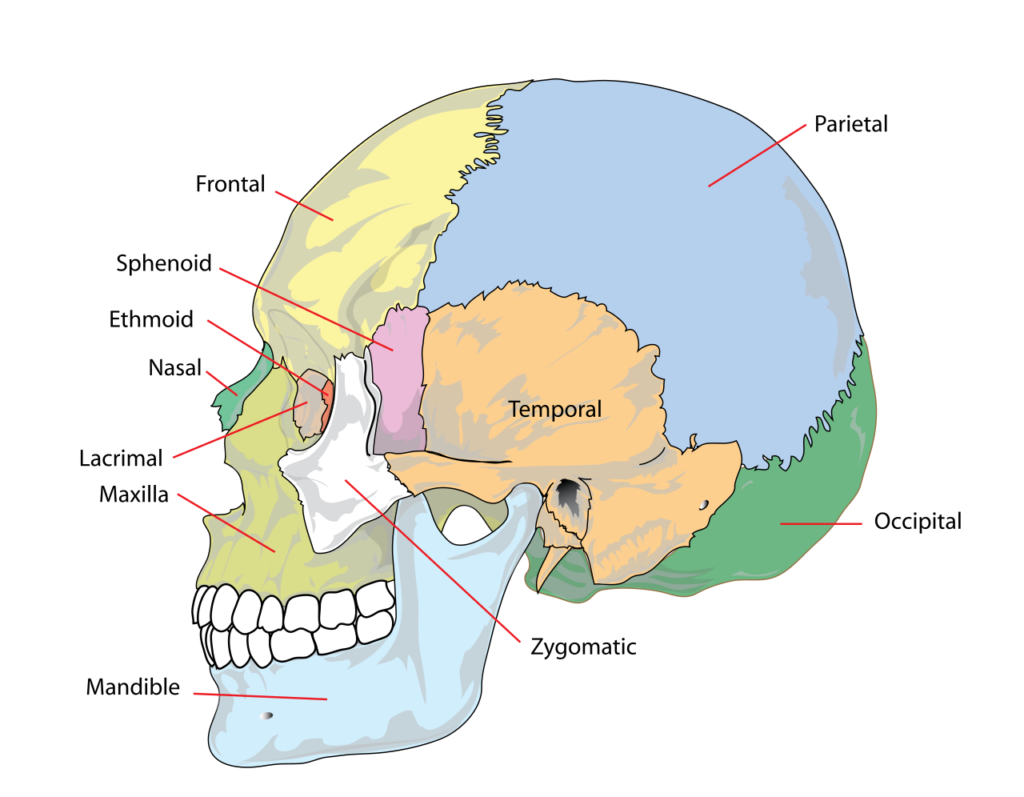
The human skull is a highly specialized protective and structural casing composed of 22 individual bones (excluding the six auditory ossicles located within the middle ear cavities). In biological and medical studies, the skull is divided into two primary functional regions: the neurocranium and the viscerocranium. 1. The Neurocranium (Braincase): Composed of 8 bones that enclose the cranial cavity to safeguard the brain and its vascular network: Unpaired bones: Frontal bone (forehead and superior orbital rims), occipital bone (base and posterior wall, containing the foramen magnum), ethmoid bone (roof of the nasal cavity and part of the cranial floor), and sphenoid bone (the central keystone of the skull base). Paired bones: Parietal bones (superior and lateral roof) and temporal bones (inferior lateral walls, housing internal hearing apparatus). 2. The Viscerocranium (Facial Skeleton): Formed by 14 bones that define facial morphology and support the respiratory and digestive portals: Paired bones: Maxillae (upper jaw), zygomatic bones (cheekbones), nasal bones (bridge of the nose), lacrimal bones (medial orbit), palatine bones (posterior hard palate), and inferior nasal conchae. Unpaired bones: Vomer (posterior nasal septum) and mandible (lower jaw). Key Articulations and Functional Anatomy: Most cranial bones fuse tightly via immovable fibrous joints called sutures (coronal, sagittal, lambdoid, and squamosal). The mandible is the only mobile bone of the skull, articulating with the temporal bone via the bilateral temporomandibular joints (TMJ) to allow speech and mastication. In fetal and neonatal stages, flexible membranous spaces known as fontanelles permit passage through the birth canal and expand to facilitate rapid postnatal brain growth.