Cranial Cavities & Upper Respiratory Tract
Cranial Cavities & Upper Respiratory Tract
A comprehensive anatomical guide to the nasal cavity, detailing its osteological boundaries, nasal conchae, paranasal sinus connections, and physiological roles in respiration and olfaction.
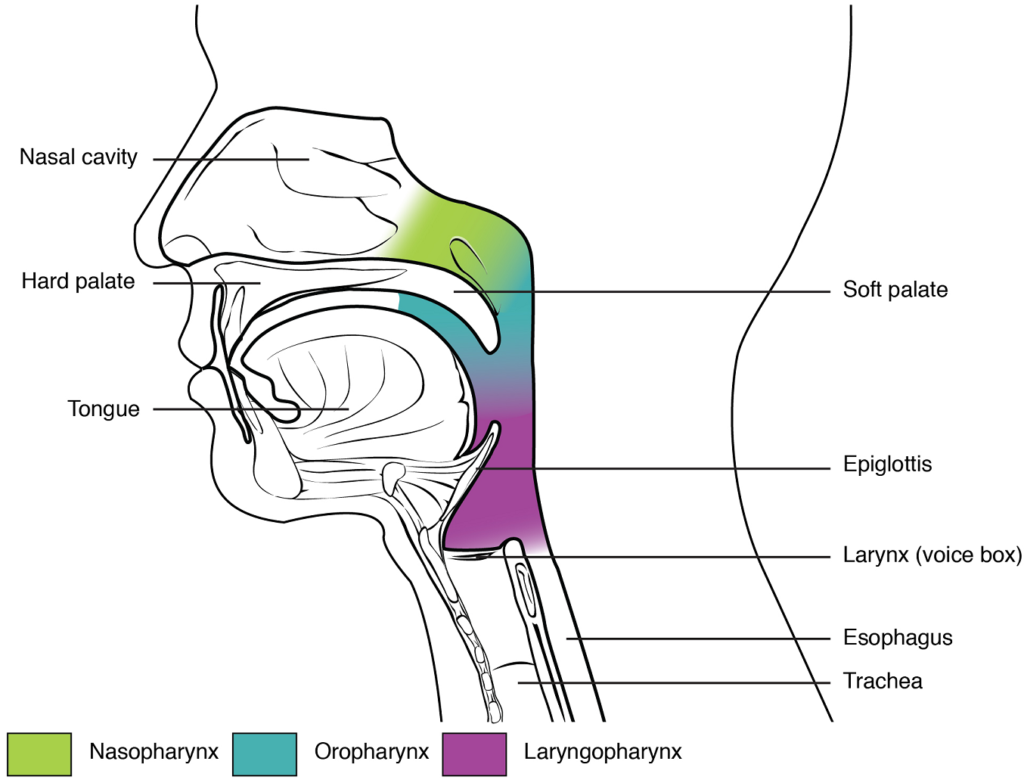
The nasal cavity is a large, air-filled space located centrally within the facial skeleton, forming the primary entry point of the respiratory system. It extends from the external anterior openings (anterior nares or nostrils) to the posterior apertures (choanae), which open directly into the nasopharynx. The cavity is partitioned along the midline by the nasal septum into two symmetrical chambers. Osteological Boundaries and Walls: The architecture of the nasal cavity is formed by several cranial and facial bones: Roof: Built from anterior to posterior by the nasal and frontal bones, the horizontal cribriform plate of the ethmoid bone (perforated for olfactory nerve fibers), and the body of the sphenoid bone. Floor: Formed by the hard palate, consisting of the palatine processes of the maxillae anteriorly and the horizontal plates of the palatine bones posteriorly. Medial Wall (Nasal Septum): Primarily constructed of bone posteriorly (the perpendicular plate of the ethmoid superiorly and the vomer inferiorly) and septal cartilage anteriorly. Lateral Wall: The most intricate surface, characterized by three curved bony shelves called nasal conchae (superior, middle, and inferior). The superior and middle conchae are projections of the ethmoid bone, while the inferior concha is an independent facial bone. Meatuses and Sinus Drainage: Beneath each concha lies a corresponding groove or meatus: Superior meatus: Receives drainage from the posterior ethmoidal air cells and the sphenopalatine foramen. Middle meatus: Drains the frontal sinus, maxillary sinus, and anterior ethmoidal air cells via the hiatus semilunaris. Inferior meatus: Receives the opening of the nasolacrimal duct, draining tears from the orbital surface into the nose. Key Functions: The nasal cavity acts as a conditioning chamber that warms, humidifies, and filters inhaled air before it reaches the lungs. Additionally, its superior mucosal zone contains specialized olfactory epithelium for scent detection, and its associated air spaces contribute to voice resonance.